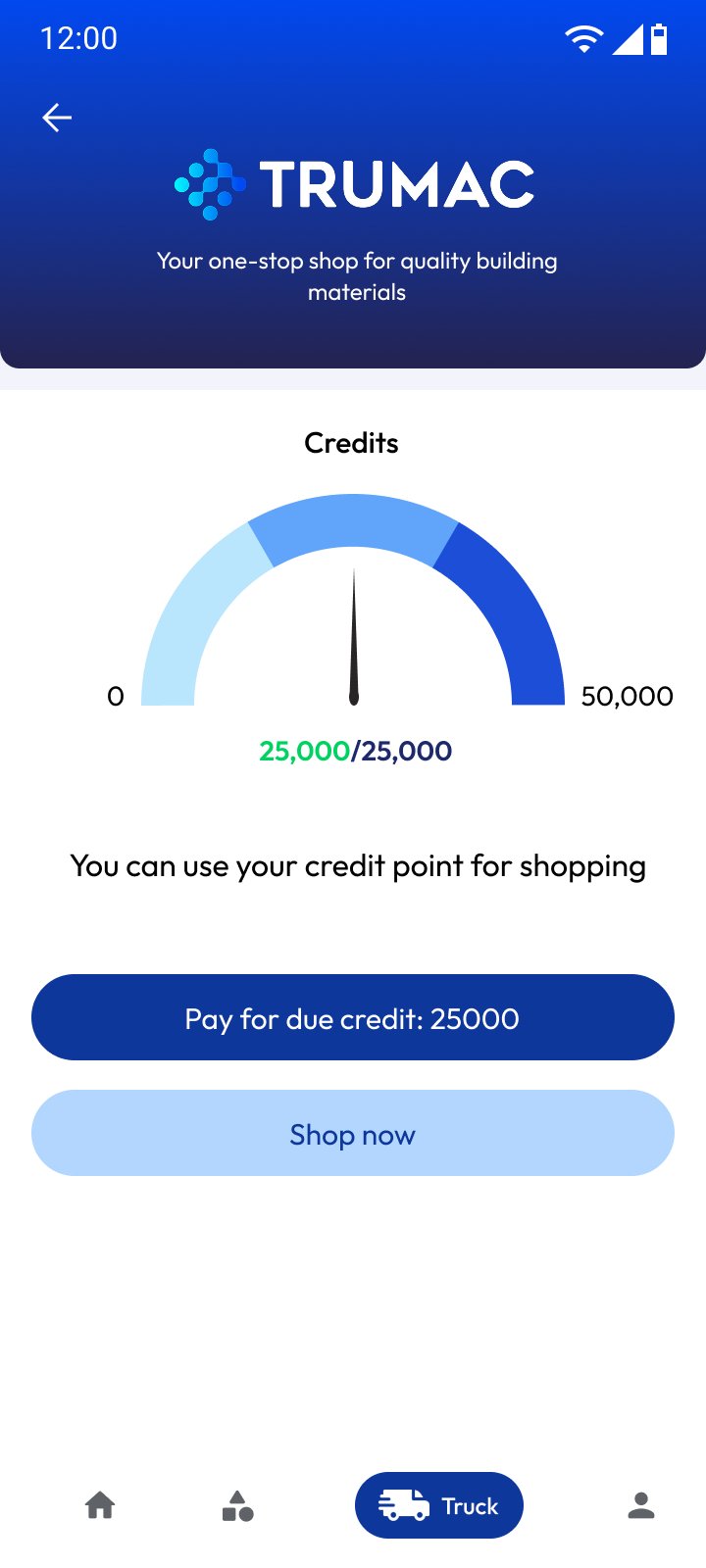

Construction merchants don't shop. They procure — on credit, on trust.
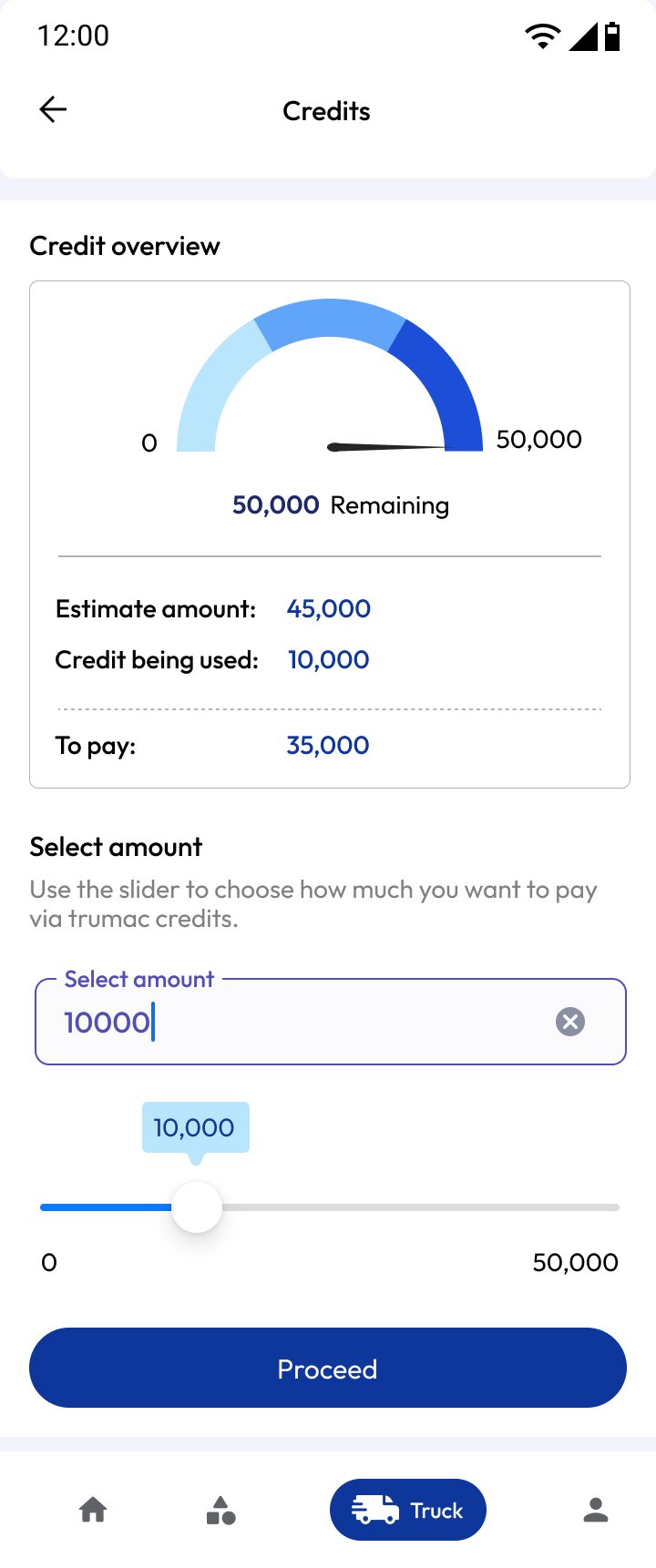
They buy against project timelines, on credit, in an industry that runs offline and on relationships. Designing TruMac with consumer-commerce patterns produced a product that felt familiar and failed operationally. The real challenge wasn't the catalog — it was extending trust without a credit bureau.
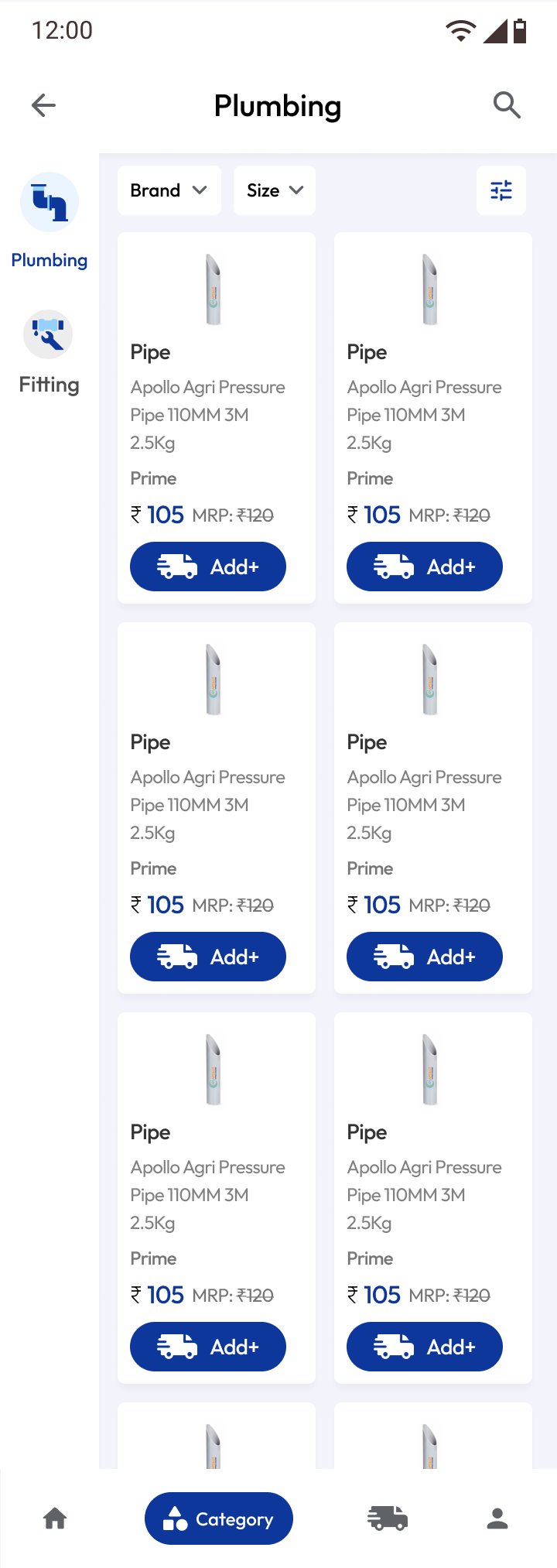
Familiar on purpose.
Search by HSU code, best-sellers, categories, brand and size filters, Add+. Consumer-commerce patterns chosen deliberately — because adoption in an offline trade depends on the product feeling like something merchants already understand.
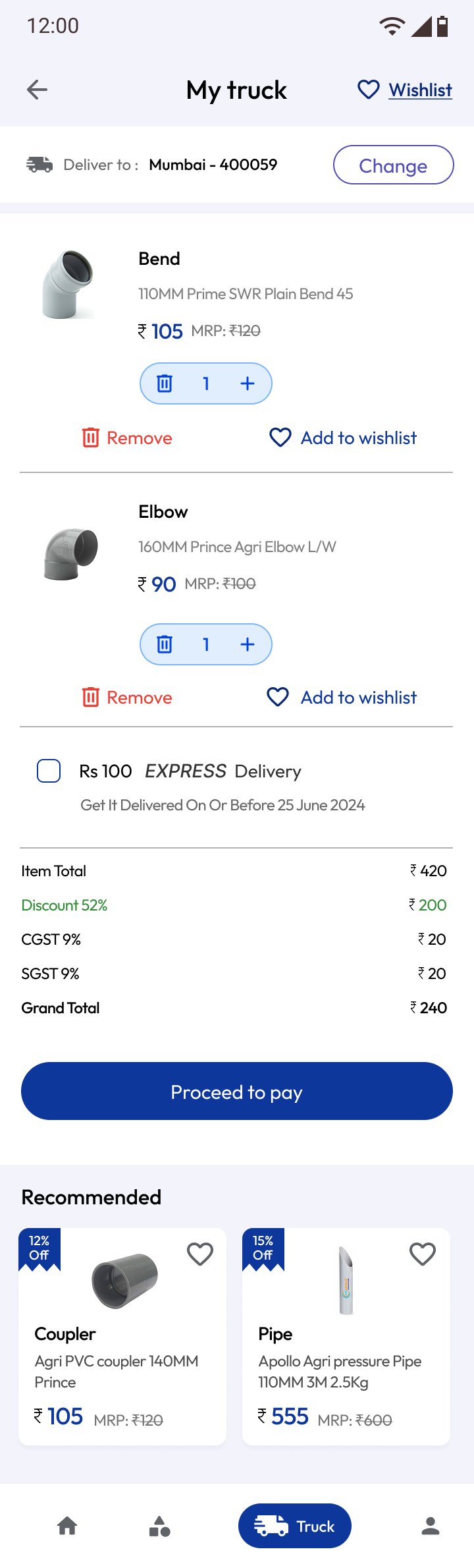
The cart is where the disguise drops.
Deliver-to pincodes. MRP versus net price. CGST and SGST broken out. Wholesale discount. Express delivery as a procurement decision, not a consumer treat. This is procurement accounting — the moment the consumer mask comes off.
Before credit can exist, trust must be established.
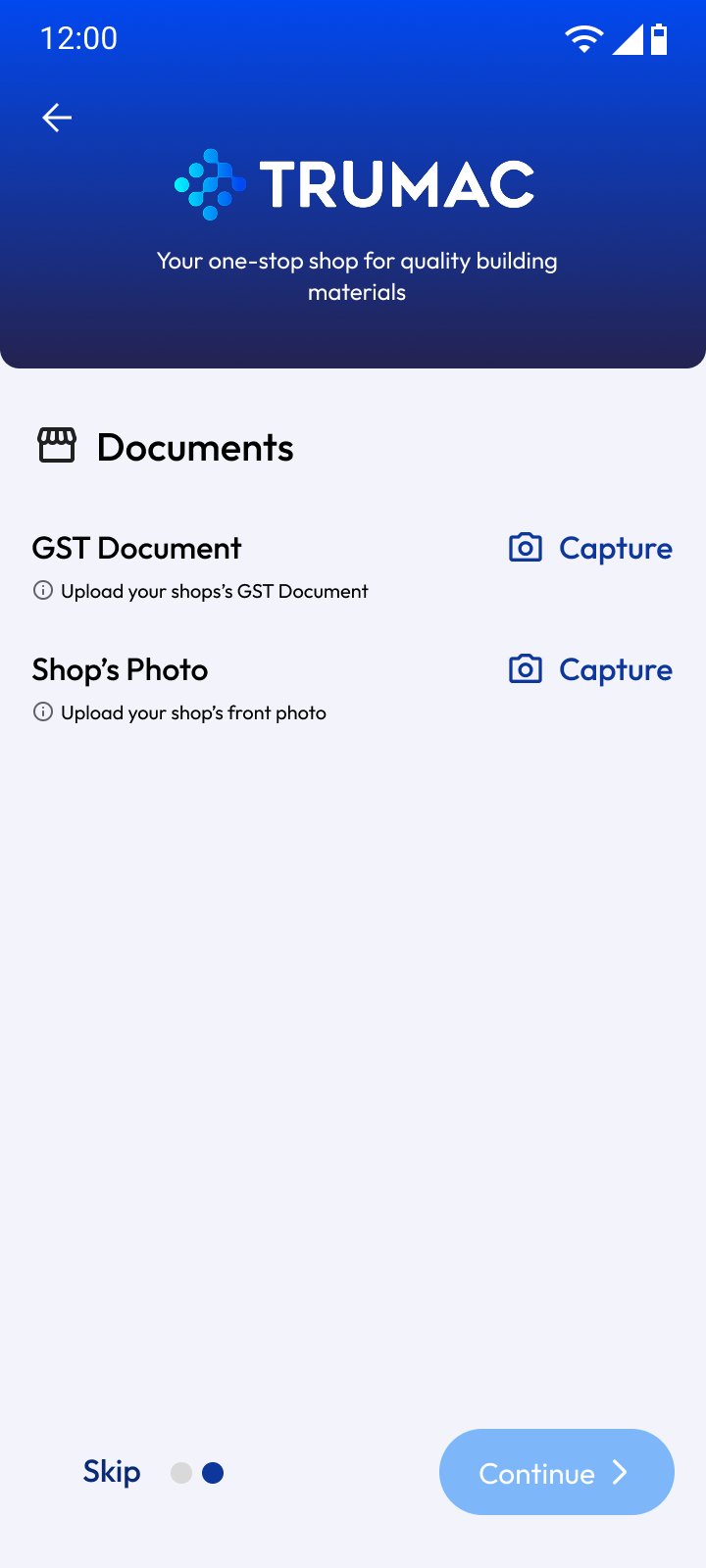
Onboarding captures the GST document and a photo of the shop — proving the merchant is a real, registered, physical business. Not a settings page. The front door. Credit does not exist without it.
Every repayment compounds the relationship.
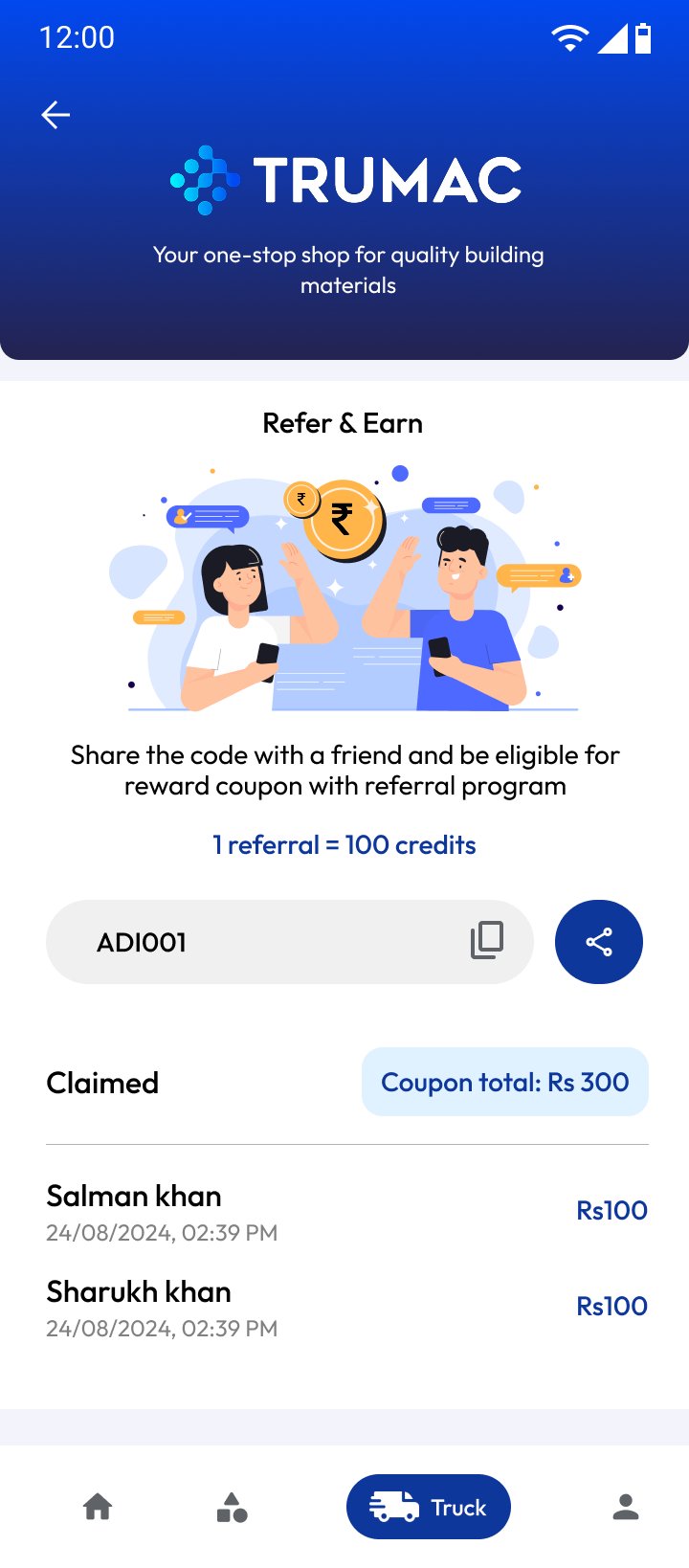
Referrals that pay back into the trust economy.
Referrals don't pay cash — they pay credits. One referral equals 100 credits, and every new merchant enters the same verification-and-credit loop that retains the existing ones. Growth and product are the same system.
Familiarity on top. Embedded finance underneath.
TruMac used a familiar commerce surface to win adoption, then used verification and credit to do what consumer e-commerce never could — extend trust to an informal industry that runs on relationships and cash.
From a storefront to a credit relationship.
TruMac shipped as a mobile-native procurement platform — discovery, GST and shop verification, embedded credit, repayment, and a credit-based referral economy — bringing trust-based purchasing to an offline construction-materials industry.